Imagine sinking your teeth into a warm, gooey slice of chocolate lava cake, where the rich aroma of melted chocolate envelops you like a cozy blanket on a chilly evening. Each bite bursts with decadent flavors, creating a symphony of sweetness that dances on your palate, calling to mind laughter-filled gatherings and delightful celebrations.
This indulgent treat isn’t just dessert; it’s an experience that transforms any ordinary day into something extraordinary. Whether it’s a romantic dinner for two or a festive holiday feast with friends, the anticipation of that molten center makes every forkful an exciting adventure worth savoring.
Why are Vietnamese Pickled Carrots and Daikon a must-try?
Bursting with flavor, these pickled veggies add a delightful crunch to any dish!
Quick and easy, they take just minutes to prepare, making them perfect for busy weeknights.
Versatile, they complement everything from banh mi to salads, elevating your meals effortlessly.
Crowd-pleaser, their tangy sweetness will impress family and friends alike. Enjoy the unique taste of this vibrant recipe!
Vietnamese Pickled Carrots and Daikon Ingredients
For the Pickling Brine
- Water – use filtered water for the best flavor.
- Rice vinegar – this brings a subtle sweetness; feel free to substitute with apple cider vinegar if needed.
- Sugar – adds a touch of sweetness to balance the tang; adjust to taste based on your preference.
- Salt – enhances the flavor and is essential for the pickling process.
For the Vegetables
- Carrots – julienne them for the perfect crispness; their natural sweetness shines through in the brine.
- Daikon radish – provides a crunchy texture and mild flavor; you can use other radishes in a pinch, but daikon is traditional.
Enjoy creating this vibrant, zesty dish that’s perfect as a side or topping!
How to Make Vietnamese Pickled Carrots and Daikon
1. Prepare the vegetables: Begin by peeling and julienning 2 cups of carrots and 2 cups of daikon radish. Aim for uniform pieces to ensure even pickling and a delightful crunch.
2. Combine the brine: In a saucepan, mix 1 cup of water, 1 cup of vinegar, ½ cup of sugar, and 1 tablespoon of salt. Heat gently until the sugar dissolves completely, creating a fragrant brine.
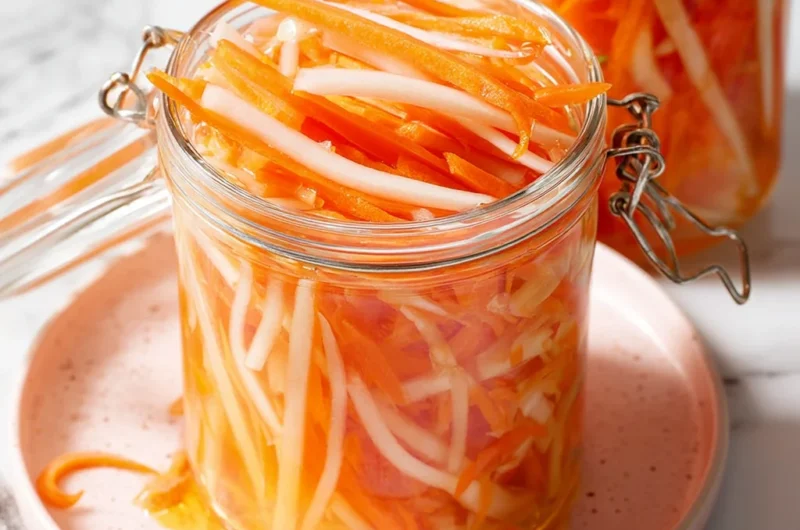
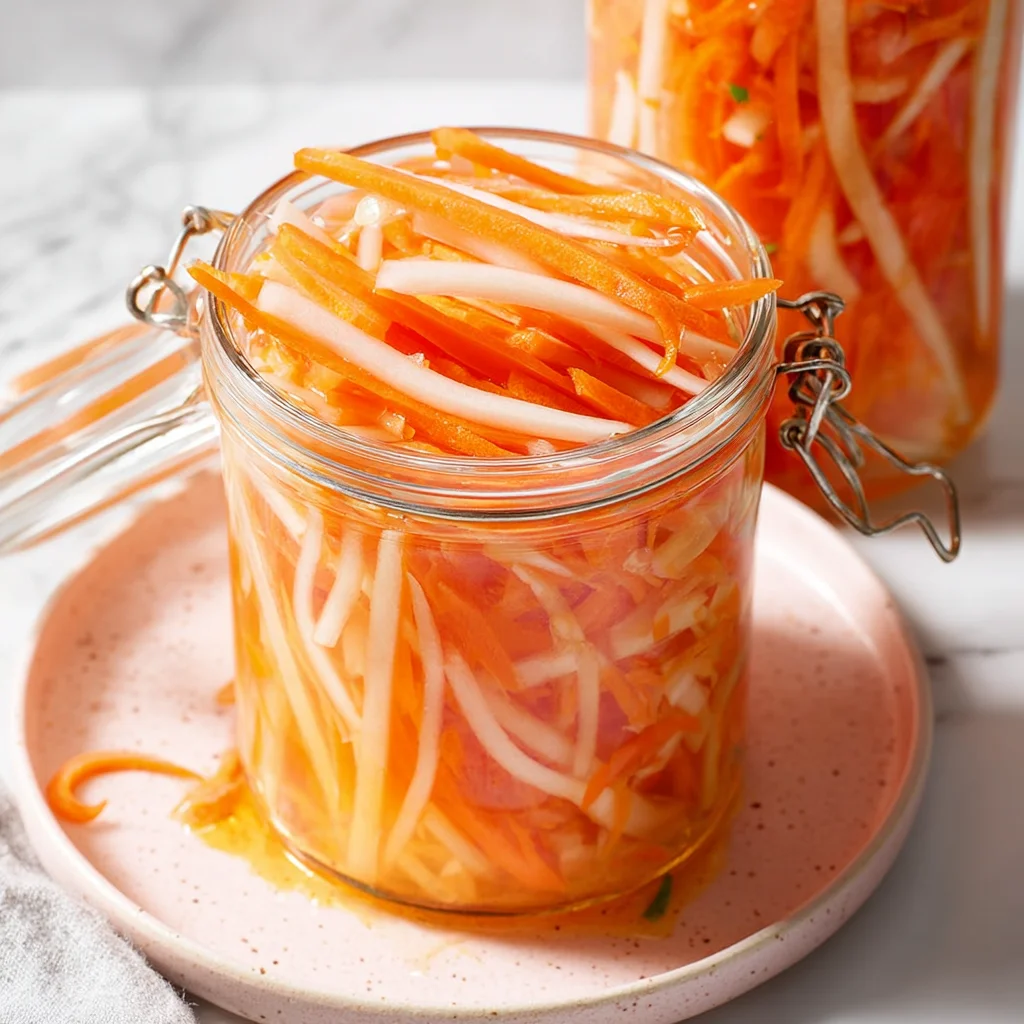
3. Pack the jars: Place your prepared carrots and daikon in clean, sterilized jars. Layer them attractively for visual appeal; this beautiful color combination will make your fridge pop!
4. Pour the brine: Carefully pour the warm brine over the veggies in the jars, ensuring they are fully submerged. Leave about half an inch of space at the top to allow for expansion.
5. Seal and cool: Tightly seal the jars with lids and let them cool at room temperature for about 30 minutes before transferring them to the fridge for at least 24 hours to pickle.
6. Serve with love: After a day, your Vietnamese Pickled Carrots and Daikon will be ready! Enjoy them as a refreshing side or topping on your favorite dishes.
Optional: Add sliced chili peppers for an extra kick!
Exact quantities are listed in the recipe card below.
Tips for the Best Vietnamese Pickled Carrots and Daikon
- Choose Fresh Vegetables: Select firm, fresh carrots and daikon for the best texture and flavor in your pickles.
- Perfect Cutting Technique: Cut the vegetables into thin, uniform matchsticks to ensure they pickle evenly and absorb the brine well.
- Mind the Sugar Balance: Adjust the sugar according to your taste; too much can overpower the tanginess of your Vietnamese pickled carrots and daikon.
- Brine Time Matters: Allow at least 24 hours for the vegetables to pickle; this enhances their flavor and crunchiness significantly.
- Avoid Overstuffing Jars: Use enough brine to fully submerge the veggies without overcrowding; this prevents uneven pickling.
Storage Tips for Vietnamese Pickled Carrots and Daikon

- Fridge: Store your Vietnamese pickled carrots and daikon in an airtight container for up to 2 weeks to maintain their crispness and flavor.
- Room Temperature: It’s best to avoid keeping pickled vegetables at room temperature. They can safely sit out for a few hours during meals but should be refrigerated afterward.
- Freezer: While freezing is not recommended due to texture changes, if necessary, you can freeze them in a freezer-safe bag for up to 3 months. Thaw in the fridge before enjoying.
- Reheating: For serving, simply take the desired amount straight from the fridge. There’s no need to heat; enjoy them cold as a refreshing side!
Vietnamese Pickled Carrots and Daikon Variations
Feel free to let your creativity shine as you explore new flavors and textures in this delightful recipe!
- Spicy Kick: Add thinly sliced chili peppers for a fiery twist that will awaken your taste buds. This subtle heat enhances the sweetness of the carrots and daikon, creating a delicious balance.
- Crispy Radishes: Replace some daikon with radishes for an extra crunch. The peppery bite of radishes complements the sweetness beautifully, making each bite a refreshing surprise.
- Sweetener Swap: Use honey or maple syrup instead of sugar for a natural sweetness. This change adds depth to the flavor profile and gives a unique twist that’s still utterly satisfying.
- Herbaceous Boost: Toss in fresh cilantro or mint after pickling for an aromatic lift. The herbs add vibrant freshness, making every mouthful feel like a taste of spring.
- Vinegar Variations: Experiment with different vinegars such as rice or apple cider for distinct flavors. Each vinegar brings its own character, transforming your pickles into something uniquely yours.
- Fruit Fusion: Incorporate thin slices of mango or pineapple for a tropical flair. The fruity addition adds unexpected sweetness and pairs wonderfully with the tangy brine.
- Garlic Infusion: Add crushed garlic cloves to the brine for an earthy aroma. This twist offers a savory depth that elevates the entire dish, inviting you to savor each bite even more.
- Fermented Flavor: Let your pickles ferment for a few days instead of quick-pickling them. This method introduces probiotics and a deeper flavor, creating an exciting transformation in your kitchen.
Make Ahead Options
Preparing Vietnamese Pickled Carrots and Daikon is an excellent way to streamline your meal prep, allowing vibrant flavors to develop while saving you time during busy weekdays. You can easily make the pickled carrots and daikon up to 3 days in advance. To do this, simply julienne 2 cups of carrots and 2 cups of daikon, then combine them in a jar with a mixture of 1 cup of rice vinegar, 1 cup of water, ½ cup of sugar, and 1 tablespoon of salt. Shake well and refrigerate the mixture for at least 24 hours before serving for optimal flavor infusion. To maintain quality, ensure the vegetables are fully submerged in the brine and use an airtight container. When ready to enjoy, simply drain excess liquid or serve directly as a crunchy, tangy side that complements any meal!
Vietnamese Pickled Carrots and Daikon Recipe FAQs
What type of carrots and daikon should I use?
For the best flavor and texture, choose fresh, firm carrots and daikon that are vibrant in color. Look for carrots that are bright orange without any soft spots, while the daikon should be white and smooth. If you can find them at a local market, opt for smaller, younger varieties—they tend to be sweeter and less bitter.
How should I store my pickled carrots and daikon?
Once your pickled carrots and daikon have cooled to room temperature, transfer them to an airtight container and refrigerate. They’ll stay fresh for about 2-3 weeks. Just make sure they’re fully submerged in the brine to maintain their crunchiness!
Can I freeze pickled carrots and daikon?
Freezing isn’t recommended for pickled carrots and daikon as it can alter their crisp texture. However, if you have leftovers you can’t finish within a few weeks, consider making a smaller batch that fits better into your weekly meals instead of freezing.
What if my pickling brine is too salty or sour?
If you find your brine too salty or sour, don’t worry! You can dilute it with a bit of water or add extra sugar to balance the flavors. Taste as you go—this is all about creating something delicious that suits your palate!
Are there any dietary considerations for this recipe?
Absolutely! This recipe is naturally vegan and gluten-free, making it perfect for many dietary needs. If you’re watching your sugar intake, feel free to reduce the sugar amount or substitute with a natural sweetener like agave syrup or stevia.
How long do the flavors develop after making them?
While you can enjoy these pickles right away, I recommend letting them sit in the fridge for at least 24 hours before digging in. This allows the flavors to meld beautifully! For even deeper flavor, try waiting 3-5 days; trust me, it’s worth the wait!
Vietnamese Pickled Carrots and Daikon
Ingredients
Method
- Peel and julienne the carrots and daikon radish into uniform pieces.
- In a saucepan, mix water, vinegar, sugar, and salt. Heat gently until sugar dissolves.
- Place the prepared carrots and daikon in clean, sterilized jars.
- Pour the warm brine over the veggies, ensuring they are fully submerged.
- Seal the jars tightly and let them cool at room temperature for about 30 minutes before refrigerating.
- After 24 hours, the pickled carrots and daikon are ready to serve.